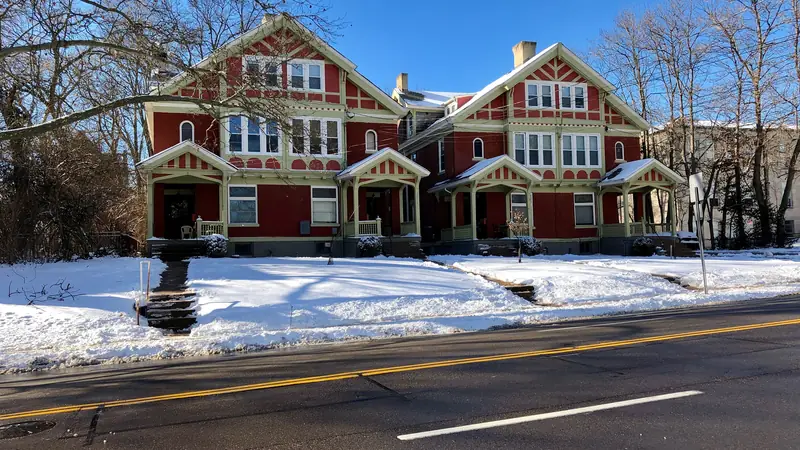
Winter roof guide · Havertown, PA 19083
Ice Dams and Winter Roof Leaks: A Havertown Guide
A ceiling stain that shows up after snow usually isn't a hole in the roof. It's meltwater backing up at the eaves, or frost melting in the attic. Here's how to tell which, what to do today, and how to stop it next winter.
- What to do right now
- Long-term fixes
- Sources checked Oct 30, 2026
What is an ice dam on a roof?
An ice dam is a ridge of ice that forms along the lower edge of a roof. Heat escaping from the house melts snow on the upper roof, the water runs down to the colder overhang and refreezes, and the ridge grows. Water then pools behind it and can back up under shingles into walls and ceilings.
Philadelphia-area winters average about 23 inches of snow (NWS normals for Philadelphia International Airport), and the National Weather Service notes that dams build over several days of daytime melting and overnight refreezing (NWS, Preventing Roof Ice Dams). In Havertown that usually means the clear, cold stretch right after a snowfall.
Why does my roof only leak in winter?
A roof that leaks only in winter usually has one of two problems. Meltwater trapped behind an ice dam works up under the shingles at the eaves, or frost that formed on the underside of the roof in the attic melts on a sunny day and drips. Neither means a hole in the shingles.
Clues help tell them apart. Stains along an outside wall or at the base of a ceiling, after snow has sat on the roof for a few days, point to an ice dam. Damp insulation or drips spread across the attic on a cold, sunny morning point to warm, moist house air reaching the attic. Leaks that only appear in wind-driven rain are a different problem again, usually flashing; see roof repair.
What should I do if I have an ice dam right now?
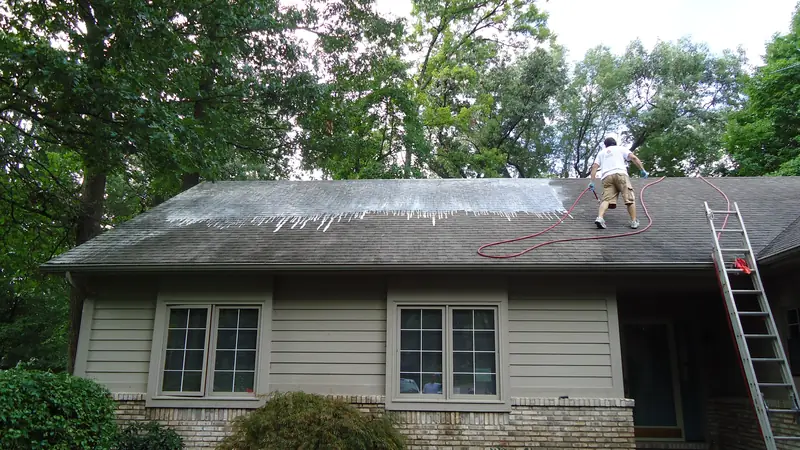
Protect the inside first: move belongings, catch drips and dry wet areas quickly so mold doesn't start. Stay off the roof. On a one-story eave you can pull snow back from the edge with a roof rake from the ground, which takes away the meltwater supply. Don't chip the ice or use chemicals that damage shingles and gutters.
University of Minnesota Extension notes that a roof rake can itself damage roofing, so pull gently and leave a thin layer of snow rather than scraping down to the shingles (UMN Extension). If water is actively coming in and you can't stop it from inside, send us the form with photos and we'll tell you what we can do and when.
Safe steps when an ice dam forms
- Protect the roomMove furniture and belongings, put down towels and buckets, and keep people out from under any ceiling that sags with water.
- Dry it fastRemove soaked insulation you can reach safely and run fans; wet drywall and insulation grow mold if left.
- Photograph itTake pictures of the ceiling stain, the eave and the ice from the ground before anything is cleaned up.
- Reduce the snowOn a low eave, pull snow back from the edge with a roof rake while standing on the ground. Skip this on second-story roofs.
- Skip the shortcutsNo hammers, chisels, rock salt or chemical de-icers on the roof, and no ladders on ice.
- Plan the real fixOnce it thaws, have the attic and eaves checked so the cause is fixed, not just the stain.
How do you prevent ice dams on a roof?
Keep the roof deck cold so snow doesn't melt unevenly. That means sealing air leaks from the house into the attic first, then adding insulation, then making sure air flows from the soffits to the upper vents. On a new roof, a waterproof ice barrier at the eaves backs that up, but it doesn't remove the cause.
The National Weather Service suggests attic insulation of at least R-30, with R-38 preferable in colder climates, plus good airflow from the eaves to the roof vents (NWS). University of Minnesota Extension puts air sealing first, because warm air leaking around light fixtures, chimneys and attic hatches is often the main source of the heat (UMN Extension). Minnesota's Department of Commerce adds that extra roof vents on their own won't eliminate ice dams and can make the problem worse (Minnesota Commerce Department).
On a replacement roof in Haverford Township, the Township's roof addendum asks for ice shield at least 24 inches inside the exterior wall line (Haverford Township roof permit addendum). Our permit guide covers the rest of the Township's roof rules.
What a pre-winter roof check should cover
Most of this can be seen from the ground, a window or the attic hatch. Leave the roof surface to a roofer.
- Shingles along the eaves that are curled, cracked or missing, where meltwater backs up first
- Flashing at chimneys, dormer walls and plumbing vents that has lifted or pulled out of mortar
- Old water stains on attic boards near the eaves, a sign of past ice dams
- Light or daylight around attic hatches, recessed lights and pipes, which means warm air is leaking up
- Soffit vents blocked by insulation or paint, so outside air can't flow under the roof
- Bath and kitchen fans that vent into the attic instead of outdoors
- Branches over the roof that could drop limbs under the weight of ice
Is it worth getting a roof inspected before winter?
If the roof is older or has leaked before, yes. Fall is when small problems are easiest to fix: a lifted shingle, a gap in chimney flashing or a worn vent boot is a short repair on a dry day, and a much bigger one after meltwater has soaked the decking. Our roof inspection and estimate are free.
Ask for a written note of what was found, with photos, so you have a record of the roof's condition before winter. If the inspection shows the roof is near the end of its life, see roof replacement for what a tear-off involves and how winter scheduling works.
How often winter weather hits Delaware County
| NOAA event type (Delaware County, PA) | Records, 2011 to 2025 | Share starting November to March |
|---|---|---|
| Winter weather | 77 | 75 of 77 |
| Winter storm | 20 | 20 of 20 |
| Heavy snow | 8 | 8 of 8 |
| Ice storm | 2 | 2 of 2 (both in February) |
Counts of records in NOAA's Storm Events Database for Delaware County, 2011 to 2025, downloaded October 29, 2026. One storm can create more than one record, so these are not storm counts. NOAA's winter outlook issued October 15, 2026 favors warmer and wetter than average conditions for much of the East from December to February, and it does not forecast snowfall totals.
Ice dam questions
Does homeowners insurance cover ice dam leaks?
Will a new roof stop ice dams?
Should I hire someone to remove an ice dam?
Do roof vents stop ice dams?
Sources
- National Weather Service, Preventing Roof Ice Dams how dams form; insulation and ventilation
- NWS climate normals, Philadelphia International Airport average seasonal snowfall
- University of Minnesota Extension, Dealing with and preventing ice dams air sealing first; roof rake caution
- Minnesota Department of Commerce, Act now to prevent ice dams what not to do
- NOAA NCEI Storm Events Database Delaware County records, 2011 to 2025
- NOAA U.S. Winter Outlook, October 15, 2026 December 2026 to February 2027
- Haverford Township roof permit addendum ice shield requirement
Last checked 2026-10-30.
Rules change. Confirm with Haverford Township Building & Codes before you rely on any Township detail here.
Leaking after snow or ice?
Tell us where the stain is, when it showed up (during snow, during a thaw, or on a cold sunny day) and how old the roof is. Photos taken safely from the ground or inside help.
Office hours: Monday to Friday, 9am to 5pm. Form requests are answered during office hours.